The unique integration of AI engineering and life sciences has prepared me for a career in bioinformatics, and I wholeheartedly recommend this path to other Swedish students interested in the intersection of these fields. The opportunities for research, the supportive academic community, and the vibrant campus life have made my experience truly remarkable.
Introduction
The generous support from the Mix Family Entrepreneur Foundation has been instrumental during my time in the Master’s of Engineering (M.Eng.) program in Computation and Cognition at the Computer Science and Artificial Intelligence Lab (CSAIL) and Broad Institute of Massachusetts Institute of Technology (MIT).
CSAIL & Broad Institute, MIT
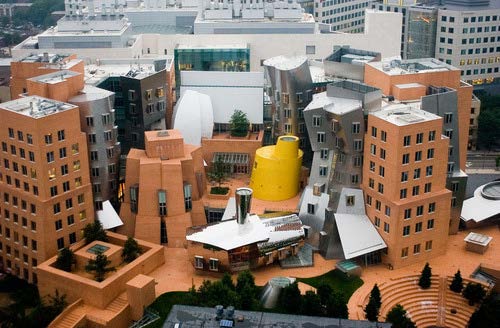
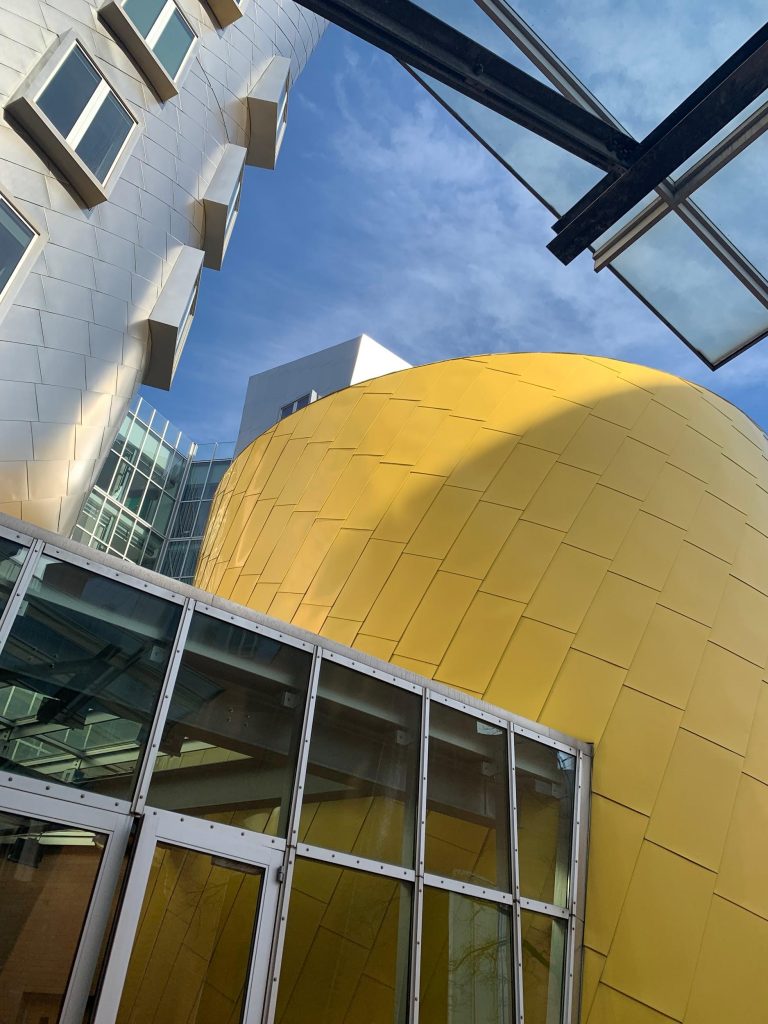
MIT’s CSAIL is located in the Ray and Maria Stata Center, whose orange, white, and silver facade, a riot of jagged edges and flowing curves, is a fitting representation of the innovation that it houses. Just a short distance away, the Broad Institute stands in austere, disciplined contrast. The two institutions are world-leaders in their respective fields—artificial intelligence (AI) and genomic medicine—and have been my academic home for the past two years as I have pursued a master’s degree with the aim of understanding how to leverage AI and biomedical data to tackle key challenges in the life sciences.
Research
My master’s thesis research focused on applying machine learning to better understand the biology underlying Alzheimer’s Disease and Related Dementias (ADRDs). These diseases, which include Alzheimer’s Disease, Parkinson’s Disease, Frontotemporal Dementia, and Lewy Body Dementia, are each classically defined by a particular type of abnormal protein plaque in the brain. However, most dementia patients have more than one type of these protein plaques, making it unclear how they interrelate—or whether it is even useful to define diseases based on these plaques. As such, the goal of my research was to explore whether there were alternative ways of defining dementia subtypes based on disease processes that are more informative for drug development. To achieve this, I used a wide array of machine learning algorithms applied to massive “single-cell” datasets, which describe the gene expression patterns found in cells in the prefrontal cortexes of hundreds of patients. The work was presented at the annual conference of the American Society for Human Genetics (ASHG), where it won the Reviewer’s Choice award, placing it in the top 10th percentile of all submissions. In addition, I worked on a separate study focused specifically on tau protein-associated dementias, in which we computationally analyzed sporadic and Mendelian (entirely genetic) forms of these dementias across multiple different brain regions.
My M.Eng. experience would not have been complete without classes in topics such as computational molecular biology and cellular neuroscience, both of which greatly enhanced my ability to apply AI in biomedical contexts. Altogether, the M.Eng. program at MIT has not only further developed me as a machine learning engineer; it has also introduced me to the vast world of molecular biology research, inspiring and preparing me to pursue further research as a PhD student in the intersection of these two fields.
Daily life & future thoughts
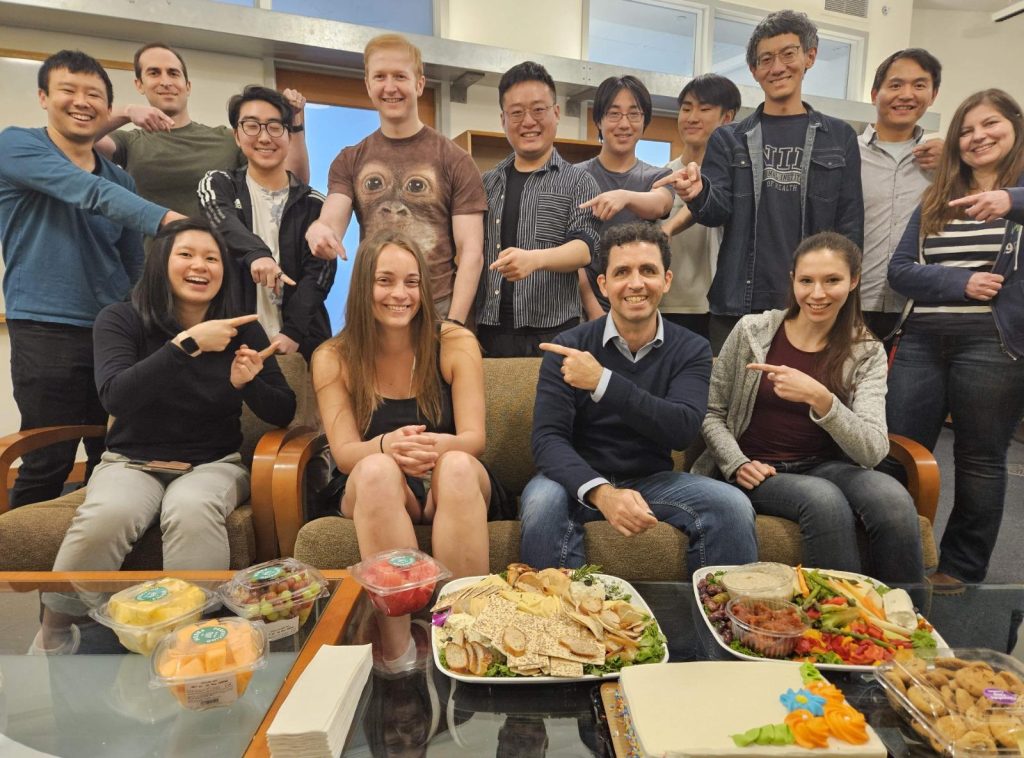
Cambridge is an exceedingly pleasant college town, characterized by meandering, leafy streets that converge onto quaint little neighborhood squares. One of these is Central Square, which offers a quintessential college town experience through its colorful music venues like the Middle East, vegetarian diners like Veggie Galaxy, and vintage clothes shops and vinyl records stores. Another is Kendall Square, which, in remarkable contrast, feels like a tiny sliver of New York City with its towering, shiny sky-scrapers and gourmet restaurants. My tight-knit group of lab colleagues would regularly descend upon either square to celebrate publications and birthdays, enjoying each other’s company over a wide range of cuisines and discussion topics.
My time at MIT, supported by the Sweden-American Foundation and the Mix Family Entrepreneur Foundation scholarship, has exceeded my expectations in every aspect. The unique integration of AI engineering and life sciences has prepared me for a career in bioinformatics, and I wholeheartedly recommend this path to other Swedish students interested in the intersection of these fields. The opportunities for research, the supportive academic community, and the vibrant campus life have made my experience truly remarkable. I extend my deepest gratitude to the Mix Family Entrepreneur Foundation for their support, which has been pivotal in my academic and personal development.
Best,
Alex Berg